Is Your Child Ready for Reading? It Might Start with Their Eyes
Why reading difficulties can start in the eyes — and how play, movement and early awareness can make all the difference.
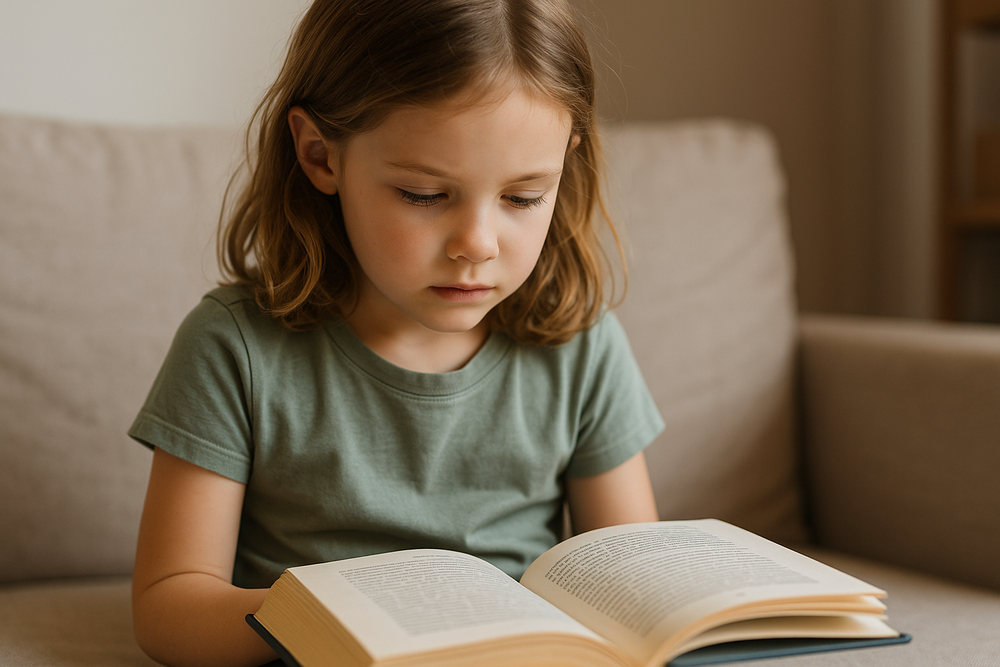
Recently, I had a conversation with a friend about his twins. One of them was racing ahead with reading, sounding out words and recognising letters with ease. The other was finding it much more challenging. Naturally, he wondered why. Both children were the same age, had the same teacher, and were growing up in the same environment.
When I asked him, “Are her eyes ready to read yet?” he paused. It was something he had never even considered. And that pause is important — because when it comes to early reading, it’s not always about age or intelligence. Sometimes, it’s about eye readiness.
Eye Fitness: The Foundation Before Phonics
Before children can confidently learn phonics or sit down with a book, their eyes need to develop certain physical skills. These skills are known as eye fitness, and they include four key elements:
1. Focus
The ability to see objects clearly at different distances.
2. Teaming
How well the eyes work together as a pair without strain.
3. Fixation
The skill of keeping the eyes steady on one point.
4. Tracking
How smoothly the eyes follow a moving object.
If any of these skills are still developing, reading can feel tiring and frustrating. Children might lose their place on the page, rub their eyes, show redness, or simply avoid reading altogether — not because they can’t read, but because their eyes aren’t ready yet.
How Do Children Develop These Skills? Through Movement.
Eye fitness doesn’t develop from screens or flashcards. It develops through physical play and real-world experiences.
Think about:
-
Tracking a balloon floating up and down.
-
Climbing, running, and looking around outdoors.
-
Exploring 3D objects, shapes, and spaces.
-
Watching something near, then far, then near again.
These natural movements strengthen the visual pathways children need for reading.
Crossing the Midline: Another Hidden Reading Skill
Another important piece of the puzzle is crossing the midline — the ability to move one hand, foot, or eye across the centre line of the body to the opposite side. This is essential for reading and writing because our eyes must move smoothly across a page from left to right.
You can help your child practise this through simple play:
- Crawling
- Reaching for blocks on one side and placing them into a container on the other
- Drawing across a page without turning their body
- Throwing, catching, and ball games
These activities strengthen coordination and support the physical foundations needed for reading success.
Make Reading a Joyful Experience
Alongside developing physical readiness, we can help children fall in love with reading by:
- Reading together
- Letting them follow the words with their eyes while you read
- Keeping sessions short, fun, and relaxed
- Avoiding pressure or comparisons
The goal is to build positive associations with books, not stress.
Every Child Develops at Their Own Pace
Reading readiness is not based solely on age. It depends on whether a child’s eyes — and their underlying physical skills — are ready for the task. After our conversation, my friend told me he was going to get his child’s eyes tested, which is always a great step if you’re unsure.
If your child is struggling, it does not mean they are behind. It may simply mean their eyes need a little more time, movement, and play.
And when those foundations are in place, reading becomes easier, more enjoyable, and far more successful.